
In this unit we discussed about actual ways of communication, mass media consists in every kind of massive communication (T.V., newspaper, Internet, social network, etc.) that reach many people in only few minutes. Sometimes we experienced some negative effects regarding this matter if this is used to manipulate people or for unfavorable purposes.
Target vocabulary
Barrage
|
Bias
|
Comes in second
|
Evading
|
Inconsequential
|
Lethal
|
Makes a connection
|
Newsworthy
|
Perspective
|
Regardless of
|
Remedy
|
Repetitive
|
GRAMMAR - how to form the passive?
correct form of be
+
past participle
Use by + agent if agent is known and important
The newspaper had been read by him.
=*=*=*=*=*=*=*=*=*=*=*=*=*=*=*=*=*=*=*=
UNIT 2 - THE ACHILLES HEEL

The discussion of this unit was about the heroism and achievements of people who have overcome many obstacles and have inspired many people all over the world.
Target vocabulary
Challenging
|
Determined
|
Eagles
|
Inspiration
|
Landscape
|
Scattered
|
Collapse
|
Recognition
|
Courageous
|
Empowerment
|
Judging
|
Limitations
|
Perseverance
|
Altitude
|
In store for
|
Peak
|
Proof
|
Soaring
|
Tough
|
GRAMMAR - Gerunds and Infinitives
To form the gerund, add –ing to the base form of the verb
Example:
It´s a story reaching new heights and overcoming great odds.
To form the infinitive, use to and the base form of the verb
Example:
It was very hard for the Achilles Track Club to climb Mount Kilimanjaro
=*=*=*=*=*=*=*=*=*=*=*=*=*=*=*=*=*=*=*=
UNIT 3 - EARLY TO BED, EARLY TO RISE...

Certainly sleep deprivation can be dangerous generating many negative effects to people such as fatigue, irritation, lack of focus and concentration.
Also this kind of disorders are most common that we think and they could manifest as: insomnia, apnea, restless legs syndrome, sleepwalking, daydreaming; nightmares.
Target vocabulary
Burning the midnight oil
|
Caught 40 winks
|
Nodded off
|
Shut-eye
|
Accumulate
|
Alert
|
Awake
|
Chronic
|
Do without
|
Drowsy
|
Fatigue
|
Irritable
|
Miserable
|
Naps
|
Power nap
|
Priority
|
Rub (your) eyes
|
Run by
|
Yawn
|
Snore
|
GRAMMAR: Present unreal conditionals
—It is used to talk about what you would generally do in imaginary situations.
—
—FORM:
—[If ... Simple Past ..., ... would + verb ...]
—[... would + verb ... if ... Simple Past ...]
—
Examples:
I would read more if I didn't watch so much TV.
—Mary would move to Japan if she spoke Japanese.
What Is Reported Speech? it is also called indirect speech
if we report what another person has said, we usually do not use the speaker’s exact words (direct speech), but reported (indirect) speech“Backshift” of Verbs—
—simple present - simple past
—“I am 22 years old.”
—She said that she was 22 years old.
—

=*=*=*=*=*=*=*=*=*=*=*=*=*=*=*=*=*=*=*=
UNIT 7 - WHAT´S DE USE OF HOMEWORK?

Target vocabulary
=*=*=*=*=*=*=*=*=*=*=*=*=*=*=*=*=*=*=*=
UNIT 8 - GOODBYE TO THE SIT-DOWN MEAL

=*=*=*=*=*=*=*=*=*=*=*=*=*=*=*=*=*=*=*=
UNIT 9 - FINDING A NICHE:
The Challenge for Young Immigrants

=*=*=*=*=*=*=*=*=*=*=*=*=*=*=*=*=*=*=*=
UNIT 10 - NO TECHNOLOGY? NO WAY?

—
—FORM:
—[If ... Simple Past ..., ... would + verb ...]
—[... would + verb ... if ... Simple Past ...]
—
Examples:
I would read more if I didn't watch so much TV.
—Mary would move to Japan if she spoke Japanese.
=*=*=*=*=*=*=*=*=*=*=*=*=*=*=*=*=*=*=*=
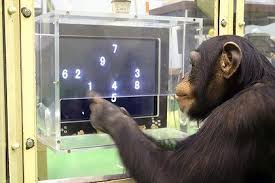
UNIT 4 - ANIMAL INTELLIGENCE
Although most people wouldn’t typically associate extreme intelligence with animals, that is a bit of a misconception. While they are obviously not able to match the computational and meta cognitive power of the human brain there are certain things some animals specialize in for which their minds are uniquely adapted. In some ways you could say they are smarter (or more functional) than even humans at performing these tasks.
Target vocabulary
Remarkable
|
Ape
|
Aware
|
In captivity
|
Cognition
|
Intriguing
|
Manipulate
|
Prevailing
|
Research
|
Socialized
|
Spontaneous
|
GRAMMAR: Reported Speech
What Is Reported Speech? it is also called indirect speech
if we report what another person has said, we usually do not use the speaker’s exact words (direct speech), but reported (indirect) speech“Backshift” of Verbs—
—simple present - simple past
—“I am 22 years old.”
—She said that she was 22 years old.
—
=*=*=*=*=*=*=*=*=*=*=*=*=*=*=*=*=*=*=*=
—
UNIT 5 - LONGEVITY
 Video related to longevity
UNIT 5 - LONGEVITY
One manifestation of our ageing population structure is the
rapid growth of “centenarians”. People who have reached 100 years of age. Genetic
Variation has been identified as a key predictor of “exceptional longevity”.
Lifestyle factors, such as nutrition, exercise, avoiding
obesity and long-term heavy smoking.
“It’s Not How Long You Live, Rather How Well You Live”
Professor Randy Pausch
Target vocabulary
Anxious
|
Elderly
|
It´s a different story
|
Population
|
Attendant
|
Face (verb)
|
Jealous
|
Senior
|
Bitter
|
Facility
|
Keep an eye on
|
Sit on the sidelines
|
Bold
|
Flamboyant
|
Life expectancy
|
Solidarity
|
Brag about
|
Generation
|
Mourning
|
Take care of
|
Bunch of
|
Get together with
|
Nurturing
|
The ripe old age of
|
Chapter
|
Go in for
|
Pass away
|
Widow
|
Citizen
|
Hotspot
|
Physician
|
GRAMMAR: Tag questions
THEY HAVE TWO PARTS:
- STATEMENT
- TAG (ADDED QUESTION)
IF THE VERB IN THE STATEMENT IS AFFIRMATIVE, THE TAG IS NEGATIVE:
The Red Hat Society
is an American organization, isn’t
it?
IF THE VERB IN THE STATEMENT IS NEGATIVE, THE TAG IS AFFIRMATIVE:
The old lady didn’t live
alone, did she?
Five reason
to donate to charity:
1. The amount
you donate is tax deductible
2. Helping
other can create an improved sense of well-being.
3. Giving to
charity may improve your sense of well-being. Knowing that you sacrificed
something such as time, finances or property in order to help others in need
can give you a sense of purpose in life or work and inner satisfaction.
4. Supporting
a cause can help keep you informed about issues of social injustice. You may
discover new points of view and opinions on topics about which you were
previously uniformed.
5. Giving to
charity out of spiritual conviction can strengthen your spiritual life. By
volunteering, you have the opportunity to build your social circles while
reaping the physical, mental and spiritual benefits from the labor you
contribute to your favorite cause.
Target vocabulary
Anonymous
|
Charity
|
Generosity
|
Moral
|
Passionate
|
Catastrophe
|
Contribute
|
Inheritance
|
Motivation
|
Wealthy
|
Appeal
|
Benefactors
|
Cause
|
Freelance
|
Fundraiser
|
Rewarding
|
Under the radar
|
Donation
|
GRAMMAR: Adjective Clauses
Adjective clauses, also called relative clauses, begin with
one of the relative pronouns such as who,
whom, whose, where , that, which, when
Whom - Refers to people, used as object or object of
preposition
Sally, who(m) he knew, arrived yesterday.
(Relative pronoun
as the object of the clause)
Which or that, refers
to things, animals
The watch which Ken bought was expensive.
The ring that Jamie wears is from her husband.
Whose, refers to possession/ownership
The father whose child is missing is frantic!
When, refers to a time (in + year, in + month, on +
day,...).
It cannot be a
subject, It can be omitted
I will never forget the day when I graduated.
I will never forget the day on which I graduated.
Where, refers to a place (in + country, in + city, at +
school,...).
It cannot be a subject, it can be omitted but a preposition (at,
in, to) usually must be added.
The house where he stays is old .
The house in which he stays is old.
Why, refers to reason, it can be omitted
I don’t know why he winked.
I don’t know the reason why he winked.
I don’t know the reason he winked.
=*=*=*=*=*=*=*=*=*=*=*=*=*=*=*=*=*=*=*=
UNIT 7 - WHAT´S DE USE OF HOMEWORK?
Target vocabulary
Obedient
|
Sacrifice
|
Duty
|
Tangible
|
Fluctuate
|
Outlawed
|
Held accountable for
|
Demanding
|
GRAMMAR: Make, Let, Help, and Get
Use MAKE, HAVE, LET + Object + base form of the verb to talk
about things that someone can require, cause, or allow another person or animal
to do.
- He has his children do their homework immediately after school.
- Jamie has them take responsibility for their own learning.
- She makes them turn off the TV.
- Amy makes her students do homework every night.
- He lets them play video games later.
- Philip lets them choose their own essay topics
HELP
It can be followed by:
1. object + base
form of the verb
She helped me do my
research project.
He helped me understand the
issue.
2. object + infinitive
He helped me to do it.
He helped me to understand the
issue.
GET
It has a similar meaning to make and have, though it implies
a less direct action by the subject of the sentence.
It is always followed by object + infinitive.
The professor got us to do extra homework.
=*=*=*=*=*=*=*=*=*=*=*=*=*=*=*=*=*=*=*=
UNIT 8 - GOODBYE TO THE SIT-DOWN MEAL
Delicacies
|
Witnessing
|
Stacked
|
Shift
|
Workforce
|
Phenomenon
|
Overrun
|
Core
|
Intimate
|
Sit-down
|
Creates
|
Leave something until later; treat as less urgent
|
Earn money
|
Something to think about
|
Problems are developing
|
Main source of income
|
Start working
|
Salary earners
|
Be skeptical about what you hear
|
Really good person
|
=*=*=*=*=*=*=*=*=*=*=*=*=*=*=*=*=*=*=*=
UNIT 9 - FINDING A NICHE:
The Challenge for Young Immigrants
Target vocabulary
Unique
|
Native tongue
|
Flourishing
|
Mainstream
|
Tight-knit
|
Assimilate
|
Suppressed
|
Relieved
|
Bone up on
|
Intimidating
|
Uprooted
|
Set apart
|
=*=*=*=*=*=*=*=*=*=*=*=*=*=*=*=*=*=*=*=
UNIT 10 - NO TECHNOLOGY? NO WAY?
Target vocabulary
Cell phones
|
Computer games
|
Instant messaging
|
Internet shopping
|
MP3 players
|
Social networking sites
(Facebook, MySpace)
|
Voice mail
|
VoIP (voice-over Internet
Protocol: Internet phone
Services such as Skype)
|
You Tube
|
